Kidifornia - Visit California

Welcome to Kidifornia

Visit California wanted a campaign to target kids and wanted to generate interest in what California has to offer them. To bring the campaign to life an activation involving a larger than life interactive digital colouring-in wall showcasing California’s top family experiences, activated at high profile family-centric locations across Sydney and Melbourne.

The users were able to select a drawing and using tablets, colour them in. Once completed, they were able to ‘swipe’ this drawing and it would appear on the large LED screen. The drawing would then show an animation and information explaining the highlights of the selected area and an email would also be sent to the user. A random draw mechanic was also implemented to give away minor prizes as well as a major prize of a trip to California.

As the technical lead for this project I had to manage front end developers and animators as well as the LED screen supplier to ensure that the project came together on time and working as expected. I was also responsible for the server side infrastructure that tied the whole activation together.

The whole experience was built with HTML5 and JavaScript. Using NodeJS and web socket technology for the instant ‘real-time’ illusion of ‘throwing’ the drawing to the screen.

Visit California were very happy with the initial activations. So happy that the activation was launched in Japan and Mexico with many more planned for the future.
Brekk-E-Tag

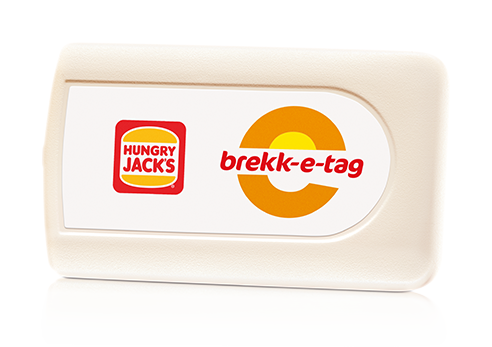
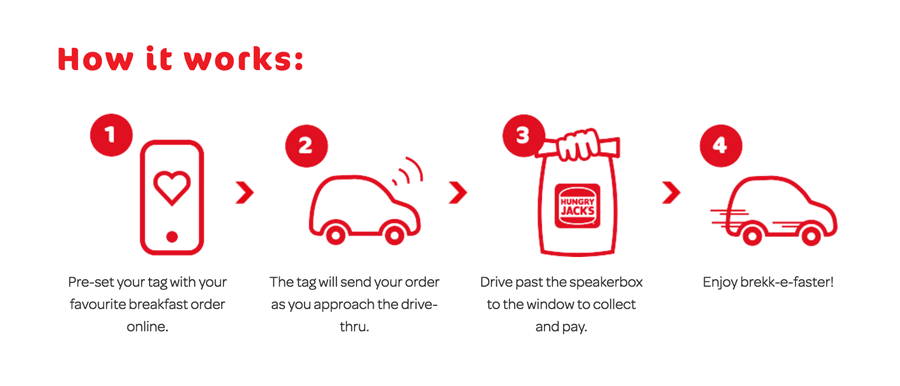
Brekk-E-Tag was a service trialled by Hungry Jacks that allows customers to order breakfast through drive thru without having to interact with anyone. Working the same way as an e-tag, the customer pre-loads their order online into the system. Then the next time they go through drive thru for breakfast, the RFID tag beeps to confirm the order was received. The driver continues and receives their breakfast on the way out.

When presenting this concept to Hungry Jacks, Clemenger BBDO needed a proof of concept to show the client that it would work. I was tasked with creating this prototype. Using a Raspberry Pi and RFID modules, I put together a system that receives the signal from the RFID tag and based on the Id encoded in the tag, displays the order on a screen inside the restaurant for the staff to prepare. The system was built using a combination of Python and NodeJs.

The prototype was successful and the go ahead was given by the client. The final specification used hardware similar to the e-tag system used on the M2.

Media

https://www.news.com.au/lifestyle/food/restaurants-bars/hungry-jacks-launches-brekketag-so-diners-dont-have-to-talk-in-the-morning-when-ordering-food/news-story/bc6483087bb8a42976bba2dabac0d54c

http://www.adnews.com.au/campaigns/hungry-jack-s-hijacks-e-tag-for-drive-thru-tech

http://www.bandt.com.au/marketing/hungry-jacks-introduces-e-tag-drive-thrus-drivers-no-longer-need-think